
Restaurant Cleaning Services Singapore: 4 Essential Areas Daily Wipe-Downs Miss
Restaurant Cleaning Services Singapore: 4 Essential Areas Daily Wipe-Downs Miss
Restaurant Cleaning Services Singapore: 4 Essential Areas Daily Wipe-Downs Miss
Most F&B outlets have a daily cleaning routine — wiping counters, mopping floors, washing dishes. But restaurant cleaning services Singapore kitchens genuinely need go well beyond this daily surface-level upkeep. Grease, grime, and dust build up in places a quick wipe-down simply can’t reach, and over time this affects both hygiene standards and compliance during health inspections.
1. Grease Buildup in Cooking Areas
Daily cleaning rarely removes the fine layer of grease that settles on walls, exhaust hoods, and equipment surfaces near cooking stations. Left to accumulate, this buildup becomes a fire hazard and a magnet for pests. A proper restaurant cleaning services Singapore provider will schedule periodic degreasing separate from daily kitchen upkeep.
2. Floor Scrubbing Service Singapore Kitchens Actually Need
Kitchen floors face constant exposure to oil, food debris, and moisture — conditions that daily mopping alone can’t fully address. A dedicated floor scrubbing service Singapore restaurants rely on uses industrial scrubbing equipment to lift embedded grease and grime from tiled or epoxy-coated kitchen floors, reducing slip hazards and extending the floor’s lifespan.
Areas that benefit most from scheduled floor scrubbing:
- Cooking stations and prep areas with heavy oil exposure
- Walk-in fridge and storage room floors
- Dishwashing zones with constant water and detergent exposure
3. High Dusting Services Singapore Restaurants Overlook
Exhaust hoods, ceiling vents, light fixtures, and high shelving in a kitchen accumulate dust and grease residue that daily cleaning teams often can’t safely reach. High dusting services Singapore kitchens require typically cover:
- Exhaust hood exteriors and surrounding ceiling areas
- Ductwork and ventilation grilles
- Overhead shelving and storage racks
Neglecting these areas doesn’t just look unhygienic — dust and grease buildup near exhaust systems can contribute to fire risk and pest attraction over time.
4. Dining Area Deep Cleaning
While front-of-house areas are usually kept visibly clean, upholstery, grout lines, and under-table areas often accumulate dust and spills that daily cleaning misses. Periodic deep cleaning of these zones keeps the dining experience consistent for customers, not just the kitchen.
Why This Matters for Compliance and Reputation
Singapore’s food establishments are subject to hygiene inspections, and grease or dust buildup in overlooked areas can affect inspection outcomes. The Singapore Food Agency’s guidelines for licensed food retail premises outline the cleanliness and maintenance standards food businesses are expected to uphold, and repeated lapses can result in demerit points or licence suspension. Beyond compliance, a consistently well-maintained kitchen and dining area also protects your restaurant’s reputation — word travels fast when hygiene standards slip.
Choosing the Right Restaurant Cleaning Services Singapore Provider
When comparing cleaning providers for your F&B outlet, ask specifically whether they offer periodic floor scrubbing and high dusting as part of their scope, or only basic daily cleaning. Many restaurants assume daily service already covers this — it usually doesn’t.
It also helps to ask how a provider handles operating hours. Most restaurants can’t afford to shut down for a deep clean during business hours, so a provider experienced with F&B clients will typically offer early morning, late night, or off-day scheduling to avoid disrupting service. It’s worth asking for references from other restaurants or cafes they’ve worked with, since kitchen environments have very different demands compared to office or retail cleaning.
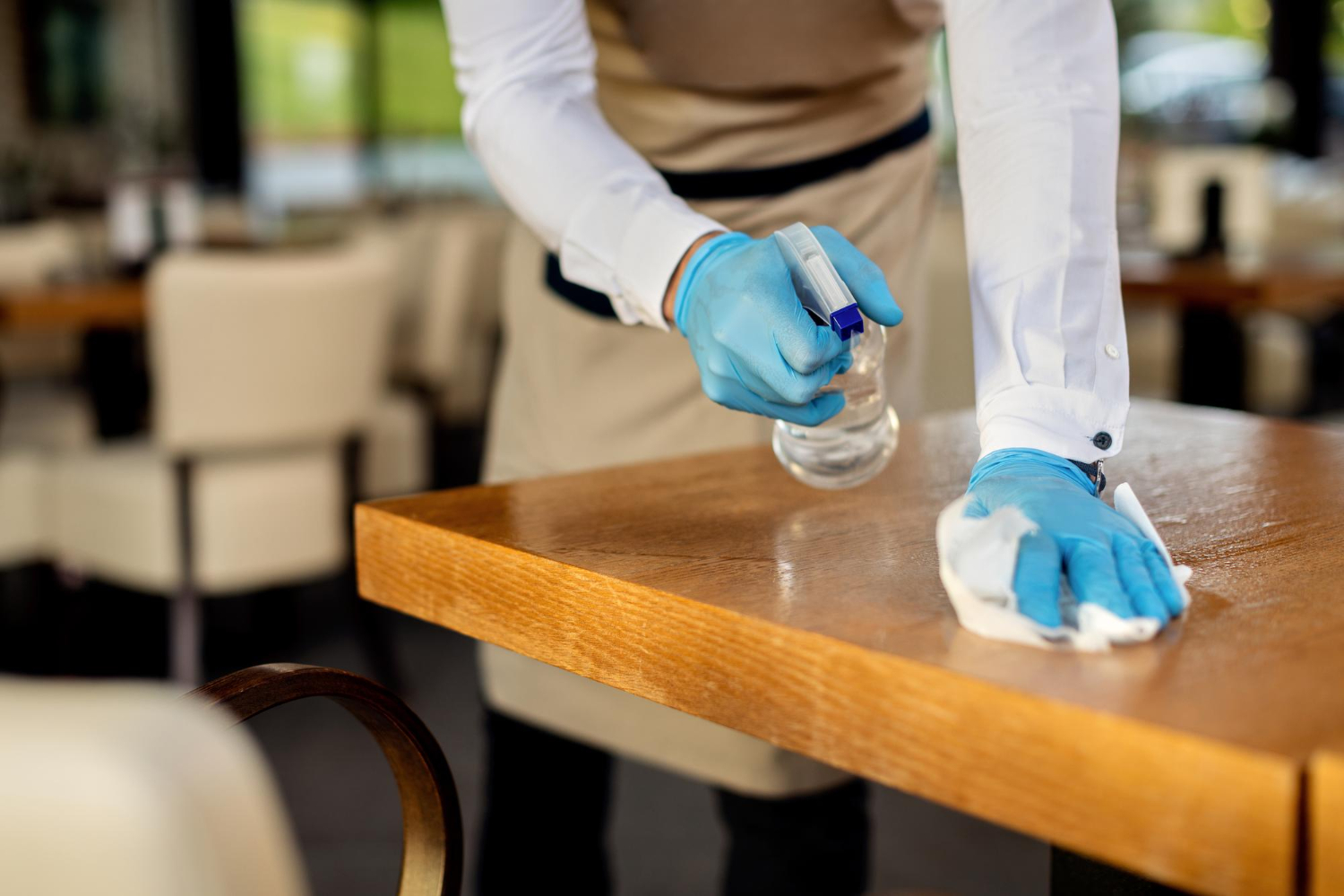
How Often Should Restaurant Cleaning Services Singapore Outlets Book Deep Cleaning?
There’s no single answer that fits every outlet, since frequency really depends on kitchen size, cooking volume, and the type of food being prepared. That said, a few general patterns tend to hold across most F&B businesses in Singapore.
High-volume kitchens — think busy hawker-style stalls, food courts, or restaurants doing multiple seatings a day — usually need floor scrubbing and grease trap attention on a weekly or bi-weekly basis, simply because oil and food debris accumulate so quickly. Smaller cafes or outlets with lighter cooking volumes can often stretch this to once every three to four weeks without issues.
High dusting, exhaust hood cleaning, and ceiling-area upkeep are typically less frequent — usually monthly or quarterly — but should never be skipped entirely, since grease residue in these zones builds up silently and creates a genuine fire risk over time. Some restaurants pair this with their routine pest control schedule, since dusty, greasy overhead areas are also attractive to pests if left unaddressed.
A simple way to figure out your ideal schedule is to start with monthly floor scrubbing and quarterly high dusting, then adjust based on how quickly grime reappears. If floors feel sticky or dull again within a week or two of a scrub, that’s usually a sign your kitchen needs a shorter cycle.
The Cost of Skipping Deep Cleaning
It’s tempting to treat floor scrubbing and high dusting as optional extras, especially when budgets are tight. But the cost of skipping them tends to show up elsewhere — and often at a higher price.
Grease buildup near exhaust systems is one of the leading contributors to kitchen fires, and insurance claims related to kitchen fires often scrutinise maintenance records closely. A documented cleaning schedule can make a real difference if a claim or inspection ever comes into question.
Floors that aren’t periodically scrubbed also wear out faster. Embedded grease and grime break down tile grouting and protective coatings over time, meaning what starts as a routine maintenance cost eventually becomes a full flooring replacement — a far larger expense than consistent scrubbing would have been.
There’s also a slower, less visible cost: staff morale and safety. Slippery floors and greasy overhead fixtures aren’t just an inspection risk, they’re a genuine hazard for kitchen staff working under pressure during service hours. Restaurants that invest in proper deep cleaning tend to see fewer workplace injuries related to slips and falls.
What a Professional Deep Clean Actually Involves, Step by Step
For restaurant owners who haven’t booked a professional deep clean before, it helps to know what to actually expect on the day, rather than just taking a provider’s word for it.
The process usually starts with an initial walkthrough, where the cleaning team assesses the kitchen layout, identifies problem areas (grease-heavy zones near the stove, high-traffic walkways, storage areas with visible buildup), and confirms the scope with you before starting. This matters because every kitchen is laid out differently, and a generic checklist rarely captures what a specific space actually needs.
Floor scrubbing typically comes next, using machines that combine mechanical agitation with cleaning solution to lift embedded grease without needing harsh manual scraping. For kitchens with drainage channels or floor traps, these are usually cleared and cleaned as part of the same pass, since blocked drains are a common source of lingering odours.
High dusting is usually done either before or after floor work, depending on the layout, since dust and debris dislodged from overhead areas need to be cleaned up afterward rather than settling on a freshly scrubbed floor. Exhaust hoods, ceiling vents, and high shelving are wiped down and, where needed, treated with degreasing agents suited to kitchen environments.
The process typically wraps up with a final walkthrough, where any remaining spots are addressed and the space is handed back over, often with photos documenting the before-and-after condition — useful both for your own records and if you ever need to demonstrate maintenance history during a health inspection.
Transform Any Space with Expert Cleaning
hCH Cleaning Services provide comprehensive cleaning solutions for every industry, keeping workspaces, production areas, and common areas spotless and hygienic.
Contact UsFrequently Asked Questions
Does daily cleaning already include floor scrubbing? Usually not. Daily cleaning typically covers mopping and surface wiping, while floor scrubbing uses industrial equipment to remove embedded grease and grime that mopping alone can’t lift.
How long does a high dusting session take for a typical kitchen? This varies by kitchen size, but most standard restaurant kitchens can be completed within two to four hours, often scheduled outside operating hours to avoid disruption.
Can deep cleaning be done without closing the restaurant? In most cases, yes. Providers experienced with F&B clients usually schedule around off-peak hours or closing days so the kitchen remains operational.
Do smaller cafes need the same level of deep cleaning as full restaurants? Frequency can often be lower for smaller, lighter-volume kitchens, but the same principle applies — grease and dust still accumulate in overhead and floor areas over time, regardless of kitchen size.
Conclusion
Daily wipe-downs keep a restaurant looking presentable, but restaurant cleaning services Singapore outlets truly need should include scheduled floor scrubbing and high dusting to address what daily routines can’t. Explore our restaurant and commercial kitchen cleaning services to see how we help F&B outlets stay compliant and spotless, front and back of house.
Transform Any Space with Expert Cleaning
hCH Cleaning Services provide comprehensive cleaning solutions for every industry, keeping workspaces, production areas, and common areas spotless and hygienic.
Contact UsRECENT POSTS
-
 Office Cleaning Tips Singapore: 10 Proven Ways to Avoid a Messy Workplace
 -
 Office Cleaning Cost Singapore: 5 Proven Factors to Avoid Overpaying
 -
 Facade Cleaning Singapore: 3 Essential BCA Compliance Rules to Know
 -
 Disinfection Services Singapore: 3 Critical Health Risks Businesses Overlook
 -
 Commercial Cleaning Services Singapore: 5 Essential Tips to Avoid Costly Surprises
 -
 Restaurant Cleaning Services Singapore: 4 Essential Areas Daily Wipe-Downs Miss
 -
 Why a Cleaning Service for Preschool Matters More Than You Think
