
Carpet Cleaning Office Singapore Made Easy: 6 Steps to Avoid Stains
Carpet Cleaning Office Singapore Made Easy: 6 Steps to Avoid Stains
Carpet Cleaning Office Singapore Made Easy: 6 Steps to Avoid Stains
Carpet cleaning office singapore teams deal with the same problem every week: coffee spills, footprints from wet days and the slow build-up of dust in high-traffic areas. A carpet can look fine from a distance, yet stains and smells quickly make a workplace feel less cared for.
This guide breaks carpet cleaning office singapore into six easy steps. It focuses on what to do when spills happen, how to stop stains from setting and what to ask a professional provider. It does not cover how often to schedule a full clean, as we have already written about that in a separate post.
The advice is general and suits most commercial carpets. Always check your carpet maker’s care instructions and your building rules before using any product.
Why Carpet Cleaning Office Singapore Needs a Plan, Not Just a Vacuum
Office carpets work hard. Staff walk across them all day, visitors bring in dust and moisture, and meeting rooms see regular food and drink. Without a plan, small marks turn into permanent stains, and dull patches appear along the busiest routes.
A good approach to carpet cleaning office singapore is built on three ideas: prevention, quick response and scheduled professional care. Prevention covers matting at entrances and sensible rules for food and drink. Quick response means having a clear process when a spill happens. Professional care is the deeper clean that daily routines cannot provide.
A plan also helps when more than one person is responsible. Cleaners, office managers and staff all need to know who does what. When everyone knows the process, spills are handled the same way each time and nothing is left until the next day.
The six steps below follow this order, starting with the simplest actions and ending with how to work with a provider. Our carpet cleaning page gives an overview of the professional service.
Step 1: Know Your Carpet Before You Start
Not all office carpets are the same. Carpet tiles, broadloom, loop pile and cut pile all respond differently to water, brushing and cleaning products. The fibre also matters, because some fibres tolerate moisture better than others.
Before any carpet cleaning office singapore routine begins, find out what you have. Check the installation records or ask the supplier for the care guide. If you cannot find it, a professional provider can usually identify the carpet type during a site visit.
Knowing the carpet helps you avoid common mistakes, such as soaking the carpet, scrubbing too hard or using a product that changes the colour. Test any cleaning product on a small, hidden area first. Wait for it to dry and check for colour change or fibre damage.
It also helps to note which areas of the office have the heaviest use. Entrances, corridors, pantry routes and meeting rooms usually show wear first. Marking these zones makes it easier to plan daily care and to brief your provider later.
Step 2: Act Fast When Spills Happen
Speed is the biggest factor in preventing permanent stains. When a spill is fresh, much of the liquid is still sitting on the surface and can be lifted. Once it soaks into the backing, it becomes far harder to remove.
For most liquid spills in a carpet cleaning office singapore setting, the basic process is simple:
- Blot the spill with a clean, dry cloth or paper towel, working from the outside inwards
- Do not rub, because rubbing pushes the liquid deeper and can spread the mark
- Lift any solid matter gently with a spoon or blunt edge
- Apply a suitable cleaning product only after checking it is safe for your carpet
- Blot again until no more liquid transfers to the cloth
Keep a small spill kit in the pantry and near meeting rooms. A few cloths, a spoon, gloves and a bottle of approved product are enough. Put a short instruction card next to it so that anyone can respond quickly.
Report larger or unknown spills to your cleaning team. If the spill involves anything that could be a health risk, ask for proper cleaning and disinfection rather than a quick wipe.
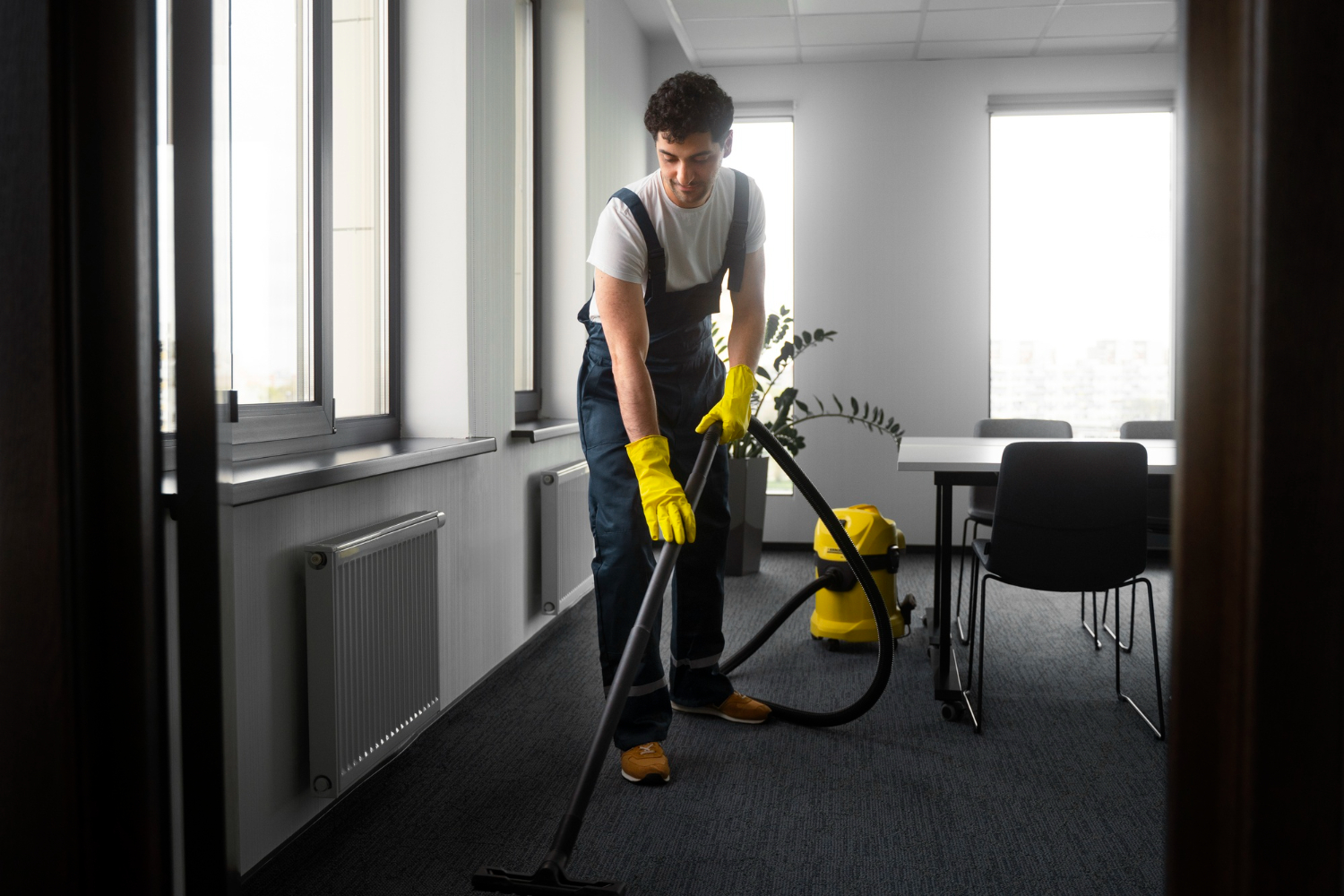
Step 3: Keep a Simple Daily Routine for Carpet Cleaning Office Singapore Teams
Most dirt on an office carpet is dry soil. It is carried in on shoes and settles into the pile, where it acts like fine sandpaper and wears the fibres. Removing it regularly protects the carpet and keeps the surface looking even.
Daily vacuuming of busy areas is the foundation of any routine. Use a vacuum with good suction and clean filters, and pay attention to edges and corners where dust collects. Entrance mats help too, as they catch a large share of dirt before it reaches the carpet.
Simple habits support the routine:
- Place mats at all main entrances and change them when worn
- Ask staff to keep food and open drinks away from carpeted meeting rooms where possible
- Report new marks straight away instead of waiting for the weekly clean
- Keep pantry and meeting areas on a clear checklist
Our meeting room and pantry support service is one way to keep these busy zones under control.
Step 4: Match the Method to the Stain
Different stains need different treatment. Using the wrong method can set the stain permanently, so it helps to identify what you are dealing with.
Common office carpet marks include:
- Coffee and tea: these are usually water-based and respond best to quick blotting
- Oil and grease: often from food or shoes, these may need a product designed for oily marks
- Ink: these can be stubborn, so avoid spreading and ask a professional if the mark is large
- Gum and wax: these are usually hardened first and then lifted carefully
- Dirt trails: these tend to build up along walkways and need broader cleaning
When you plan carpet cleaning office singapore work, be realistic about what can be removed. Old or heat-set stains may fade without disappearing, and some dyes can leave a permanent mark. A reliable provider will explain what to expect rather than promise a perfect result.
Avoid mixing different cleaning products on the carpet, as this can cause damage or unpleasant reactions. If you are unsure, stop and ask for advice before continuing.
Step 5: Deal with Odours and Moisture Early
Odours in an office carpet usually come from trapped moisture, old spills or built-up dirt. In Singapore’s humid climate, damp carpet can start to smell quickly, especially in rooms with limited airflow.
The first step is to find the source. A single old spill needs a different response from a general musty smell across a whole room. Check for leaks, air-conditioning drips or wet areas near windows and entrances, because cleaning will not last if the water source remains.
After any cleaning, drying matters. A carpet that stays wet for too long can develop an unpleasant smell and may be unsafe to walk on. A strong carpet cleaning office singapore plan includes a clear response for odour complaints and a way to confirm the carpet has dried.
Carpets can also hold dust and other particles. If staff mention that a room feels stuffy or smells odd, consider whether indoor air conditions need a closer look. Our indoor air quality monitoring service tracks indicators such as temperature, humidity and PM2.5, which can help show whether a room has an ongoing problem. If anyone feels unwell, they should speak to a doctor, as symptoms can have many causes.
Step 6: Plan Professional Cleaning Around Office Hours
Daily routines keep the surface tidy, but they do not remove deeper soil. Professional cleaning uses equipment and methods that a regular office routine cannot match. Planning it well means less disruption for your team.
For carpet cleaning office singapore projects, timing is a key question. Many offices prefer evenings or weekends so that carpets can dry before staff return. Discuss drying time with your provider and arrange a way to keep people off wet areas, such as signs or temporary barriers.
Think about furniture too. Desks, chairs and cabinets may need to be moved or worked around. Agree early who will clear personal items and cables, and whether the provider will move light furniture. Heavy or fixed items usually stay in place, so clarify the plan beforehand.
Finally, coordinate carpet work with other tasks. Carpet cleaning can be combined with general office cleaning services and, where needed, high dusting so that dust is removed from above before the floor is cleaned. Working from top to bottom stops dust from settling back on freshly cleaned carpet.
Transform Any Space with Expert Cleaning
hCH Cleaning Services provide comprehensive cleaning solutions for every industry, keeping workspaces, production areas, and common areas spotless and hygienic.
Contact UsWhat to Ask Before Booking Carpet Cleaning Office Singapore Services
A short list of questions will help you compare providers fairly. The best carpet cleaning office singapore providers are happy to explain their approach in plain language.
Ask about:
- The cleaning method they recommend for your carpet type and why
- How long the carpet will take to dry and when it is safe to use
- How they handle stains and what they cannot guarantee to remove
- Whether they visit the site or assess it from photos before quoting
- What is included in the scope, such as furniture handling and spot treatment
- Staff training, supervision and insurance cover
- How they will report problem areas after the job
Cost depends on factors such as floor area, carpet condition, access, working hours and any extra treatment needed, so compare scope carefully rather than focusing only on the final figure. A wet carpet can also be a slip hazard, so the WSH Council’s page on preventing slips, trips and falls is a helpful reference when you plan drying time and warning signs. The WSH Council also has guidance on workplace housekeeping that is worth reading as background.
Frequently Asked Questions
Where should carpet cleaning office singapore planning start? Start by identifying your carpet type and mapping the high-traffic areas. Then set up a spill kit and agree a simple routine with your cleaning team.
Can every stain be removed from an office carpet? Not always. Fresh stains are easier to treat, while old or heat-set marks may only fade. A good provider will explain what is realistic.
Should staff clean spills themselves? Small spills can be blotted straight away using the steps above. Larger or unknown spills should go to the cleaning team.
How long does a carpet take to dry after professional cleaning? It depends on the method, the carpet and the airflow in the room. Ask your provider for an estimate and plan the work outside office hours.
Does carpet cleaning affect indoor air? Clean carpets can help reduce settled dust, but many factors affect indoor air. If you are concerned about a room, consider monitoring and speak to your facilities team.
Conclusion
Carpet cleaning office singapore does not have to be complicated. Know your carpet, act fast on spills, keep a simple daily routine and plan professional cleaning around your working hours. Small habits add up to a cleaner, fresher workplace.
If you would like help with a deeper clean, visit our carpet cleaning page to learn more and get in touch with our team.
Transform Any Space with Expert Cleaning
hCH Cleaning Services provide comprehensive cleaning solutions for every industry, keeping workspaces, production areas, and common areas spotless and hygienic.
Contact UsRECENT POSTS
-
 Meeting Room Cleaning Singapore: Why 5 Simple Habits Keep Teams Healthier
-
 Carpet Cleaning Office Singapore Made Easy: 6 Steps to Avoid Stains
-
 Drone Facade Cleaning Singapore: Is It Safer? 5 Smart Facts
-
 High Dusting Services Singapore: 5 Essential Rules on How Often You Really Need It
-
 Floor Scrubbing Service Singapore: 6 Essential Differences From Mopping Every Business Should Know
-
 Preschool Cleaning Services Singapore: 8 Essential Year-End Deep Clean Tasks for a Safer Centre
-
 How to Improve Indoor Air Quality in Your Office: 8 Effective Tips for Better Air
